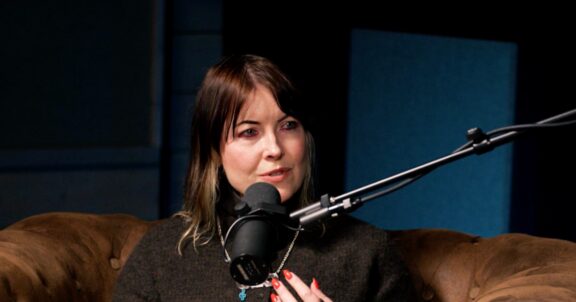

Season 2 · Episode 11
From a childhood in Hong Kong and a first computer game prescribed by an optician, to the BBC, Channel 4 and now the top of the British music industry. Dr Jo Twist OBE has spent 25 years at the front row of change in creative technology and now leads the trade body representing the UK's record labels, from moving the BRIT Awards to Manchester and the Mercury Prize to Newcastle, to fighting for artists in the age of generative AI.
Dr Jo Twist OBE (she/her) is CEO of the BPI, the trade body representing hundreds of UK label businesses and the wider recorded music sector. Born in Hong Kong and raised there through the 1970s before moving to Scotland, Jo's career began with a PhD from Newcastle University on young people, identity and online community, completed just as the dot-com bubble burst. She went on to become a broadcast journalist and researcher at the BBC, working across BBC Newsround, BBC News Online as a technology reporter, and BBC Three as multiplatform entertainment commissioner, before moving to Channel 4's education commissioning team.
She has a 25-year background across the creative industries, interactive entertainment and technology, and now leads the BPI's work promoting, protecting and growing the UK music industry, from advocacy and lobbying government to running international trade missions and showcases such as the British Music Embassy at South by Southwest. Jo sits on several boards and advisory groups, including the UKRI AI Strategic Advisory Team, the Creative PEC Board and the Mayor of London's Cultural Leadership Board. She was Chair of the BAFTA Games Committee from 2013 to 2022 and a BAFTA Trustee from 2018 to 2022. Jo is a Visiting Lecturer at Goldsmiths, University of London, Vice President of accessibility charity SpecialEffect, Patron of mental health charity Safe in Our World, and a Trustee of the Wiggin Foundation.
In 2016 she was awarded an OBE for services to the creative industries. She was named one of the Evening Standard's Progress 1000 Most Influential People in 2019, entered the Computer Weekly Hall of Fame in 2021, and has been recognised on Billboard's Power List.
Duration: 62 minutes
Season: 2 · Episode 11
Also available: Audio only on Spotify, Apple Podcasts and Acast
From Pong to a PhD: how a childhood in Hong Kong shaped a career in creative technology
Jo Twist's story starts a long way from the BPI boardroom. Born in Hong Kong and raised there through the 1970s, she grew up surrounded by technology and cultural influence long before it reached the UK. Her first brush with gaming came through necessity rather than fandom. Aged five, with a lazy eye that needed correcting, her optician suggested her parents buy her a copy of Pong to exercise it. She was, as she puts it, "never really technical" but always fascinated by technology and by storytelling in equal measure, an interest that only deepened after her family moved back to Scotland. That thread carried her to university just as the internet was arriving, into an undergraduate dissertation on the culture of internet cafes, and then to a PhD in Newcastle on young people, identity and online community, completed right as the dot-com bubble burst.
Newsround, Harry Potter and the BBC years that built her instincts for audiences
Out of academia and unsure what came next, Jo answered an advert for BBC Newsround. She did not get the researcher job she applied for, but was offered one anyway, and became a broadcast journalist covering news for children, including reporting on 9/11 for a young audience while trying not to alarm them. It was, she says, the peak of Harry Potter fandom, and Newsround built one of the earliest and biggest online fan communities around it, running interactive web chats with the cast. From there she became BBC News Online's technology reporter through the rise of YouTube and Facebook and the arrival of major new games consoles, then moved into BBC Three as multiplatform entertainment commissioner, building some of the BBC's earliest Red Button interactivity around Top Gear, Only Connect and The Apprentice. A move to Channel 4's education commissioning team followed, working on early digital-first content for teenagers and games commissioning, before she moved into the video games industry and eventually to the BPI.
Why the BPI exists and what makes British music genuinely exportable
At the BPI, Jo represents label businesses across the UK recorded music sector. Her description of the trade body's job is blunt: a lot of it is stopping avoidable problems before they happen, lobbying and educating government on the value of the industry, and creating the conditions for labels to invest in new talent. She is emphatic that British breakthrough success is not accidental. It is built on an ecosystem running from grassroots venues and music education through to charitable grant funding and, eventually, global success. Asked what makes British music so distinctive, she points to authenticity of voice, artists like Sam Fender, PinkPantheress, Lola Young and RAYE who are unmistakably rooted in where they are from while still connecting globally, alongside established acts like Coldplay who remain the world's most streamed artist. She describes the journey from grassroots stage to global stardom as a series of lily pads rather than a straight line, citing the British Music Embassy at South by Southwest, run in partnership with BBC Introducing, as one of the most important of those stepping stones, and one she has watched turn unknown acts, including YUNGBLUD in his earliest years, into global names.
Taking the BRIT Awards to Manchester and the Mercury Prize to Newcastle
Two of the most significant decisions of Jo's time at the BPI have been moving the industry's biggest showcase moments out of London. In 2026 the BRIT Awards left the capital for the first time in the show's 50-year history, heading to Manchester in partnership with Manchester City Council and Mayor Andy Burnham, and building a fringe week designed to invest in local talent and open up career pathways beyond performing, into production, technical and business roles that young people rarely hear about. The city's response, from BRIT trophies on trams to branding on traffic lights, left a strong impression on her. The Mercury Prize followed the same path in October 2025, moving to Newcastle for the first time in its history in partnership with Generator, with a Mini Mercury Choir of 68 schoolchildren from across the North East performing as the judges arrived. Jo describes the emotional impact of both events, and the hope that a child who experienced one of those fringe weeks will one day be interviewed on a red carpet as a global artist who never had to move to London to get there.
Disruption, destruction and why AI needs guardrails, not fear
Pushed on whether the music industry is keeping pace with technology, Jo argues it always has, and that it rarely gets credit for how quickly it embraces change. Her line on generative AI is precise: there is nothing wrong with disruption, but there is a lot wrong with destruction. She is critical of AI companies that expect free access to decades of creative content to train models while expecting to pay for land, power and data infrastructure, and points to the industry-backed Make It Fair campaign as part of a coordinated response demanding licensing, transparency and record-keeping. Drawing on her games industry background and a lifelong love of near-future dystopian science fiction, she is clear that AI itself is not new, but that today's large language models require guardrails, citing real-world cases of AI-driven discrimination in recruitment and facial recognition as reasons the industry cannot afford to be complacent, especially for a generation growing up with these tools embedded in daily life.
What comes next: superfandom, immersive technology and diversity as the engine of creativity
Looking ahead, Jo is most animated by what the music industry can learn from games, from fan community mechanics to immersive technology built on engines like Unreal, and by the BPI's own innovation work connecting music tech start-ups with label members. She sees a generation, shaped by the pandemic, actively seeking smaller, more personal, more face-to-face experiences even as digital tools multiply, and is careful to note that online community and connection are not lesser than the physical version, simply different. Asked for a ten-year outlook, she resists a single prediction and instead returns to a theme that runs through the whole conversation: diversity, of background, lived experience and perspective, is what drives creativity and innovation, and protecting it is not optional if the UK wants to keep producing the kind of talent that fills stadiums a decade from now.
(01:02) Welcome, and reflecting on the Progress 1000, Computer Weekly Hall of Fame and Billboard Power List recognition
(01:46) The origin story: growing up in Hong Kong and a childhood love of storytelling (02:22) The Pong story: how a childhood squint led to her first taste of gaming technology
(03:16) University, an internet cafe ethnography and a PhD in Newcastle on youth identity and online community
(05:34) Life after the PhD: the dot-com crash and a first job at BBC Newsround
(06:58) Reporting the news for children, including covering 9/11 for a young audience (07:36) The Harry Potter years: fan web chats, message boards and early digital storytelling at Newsround
(09:00) Becoming BBC News Online's tech reporter through the YouTube and Facebook era
(10:20) BBC Three multiplatform commissioner, and inventing Red Button interactivity for Top Gear, Only Connect and The Apprentice
(11:53) Moving to Channel 4's education commissioning team and working with SB.TV (14:58) Joining the BPI: what a trade body does, and why "we do it so you don't have to" (18:22) Why British music is so brilliant, from Sam Fender to Lola Young and RAYE (19:47) The UK artists breaking through globally right now, including Olivia Dean, YUNGBLUD, Sleep Token and Skye Newman
(21:42) What makes an artist exportable, and the "lily pad" journey from grassroots stage to global stardom
(25:30) Inside South by Southwest and the British Music Embassy
(30:19) The BRIT Awards moving to Manchester for the first time in its 50-year history (33:36) Manchester's BRITs fringe week and the impact on local investment and career pathways
(34:05) The Mercury Prize's first move to Newcastle, and the Mini Mercury Choir
(35:51) Is the music industry moving fast enough with technology
(37:47) Disruption versus destruction, and the Make It Fair campaign against uncompensated AI training
(40:52) Is AI an opportunity or a threat, and why guardrails matter
(47:08) The one innovation Jo thinks will genuinely change the industry
(51:11) Why community and connection are what fans are hankering after post-pandemic (55:20) The ten-year crystal ball question: where does the industry go next
(58:40) Diversity as the engine of creativity, and closing thoughts
"Record labels play a fundamental role in enabling the vital relationship between artists and fans, but the amazing work they do is often misunderstood or even mischaracterised."
DR JO TWIST
"There's nothing wrong with disruption. There is a lot wrong with destruction."
DR JO TWIST
"Diversity is the absolute engine of creativity and innovation."
DR JO TWIST
The Blinding Talent Music Industry Podcast is hosted by Mark Adams - founder of Blinding Talent and former Director of Music Programming at Channel 4. Equal parts campfire stories and practical insight, each episode is an in-depth conversation with a senior figure from across the music industry.
If this episode resonated, Blinding Talent works with independent artists across the UK and internationally - helping them build the kind of profile, audience and industry positioning that makes conversations with venues, agents and brand partners possible. From artist management consultancy with Mark Adams to digital marketing campaigns across Spotify, Meta and YouTube, everything we do is built around getting artists closer to the music industry.
Dr Jo Twist OBE is CEO of the BPI, the trade body representing hundreds of UK label businesses and the wider recorded music sector. She has a 25-year background across creative industries, interactive entertainment and technology, including senior roles at the BBC and Channel 4, and previously chaired the BAFTA Games Committee from 2013 to 2022. She sits on the UKRI AI Strategic Advisory Team, the Creative PEC Board and the Mayor of London's Cultural Leadership Board, and was awarded an OBE for services to the creative industries in 2016.
The BPI is the trade body for the UK's recorded music industry, representing hundreds of label businesses of all sizes. Its work spans advocacy and lobbying government on behalf of the industry, running international trade missions and showcases to support music exports, and helping create a business and policy environment in which labels can invest in discovering and developing British artists. The BPI also produces the BRIT Awards and the Mercury Prize, and runs education and skills programmes, including support for the BRIT School, through its charity the BRIT Trust.
In February 2026 the BRIT Awards left London for the first time in its nearly 50-year history, moving to Co-op Live in Manchester in partnership with Manchester City Council and Mayor Andy Burnham and building a dedicated fringe week to invest in local talent and open up career pathways into the music industry. The Mercury Prize followed the same approach in October 2025, holding its ceremony at Newcastle's Utilita Arena for the first time in partnership with Generator, including a Mini Mercury Choir of local schoolchildren from across the North East. Both moves reflect the BPI's commitment to the UK's nations and regions and a belief that talent, and the industry jobs around it, exist well beyond London.
The Blinding Talent Music Industry Podcast is hosted by Mark Adams, founder of Blinding Talent and former Director of Music Programming at Channel 4. Guests include Paul Samuels, Colin Barlow, Sol Parker, Judd Lander and many others from across the music industry.