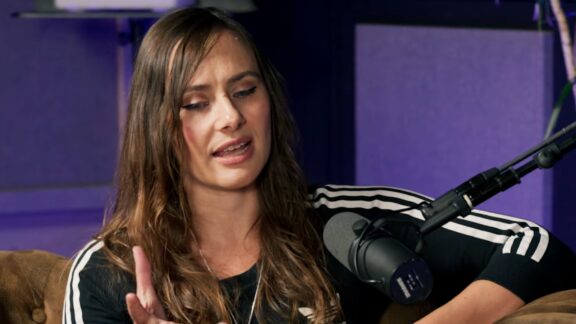

Season 2 · Episode 3
Lauren Reading-Gloversmith is the founder of 'Speak to Lauren' a counsellor for creatives and former music industry professional with a career spanning DIY music promotion, band management, PR and artist management. She discovered the alternative music scene as a teenager in Chesham, followed her passion through multiple roles in the industry and now provides therapeutic support to artists, musicians and creative professionals.
Lauren Reading-Gloversmith is a mental health expert who discovered the alternative music scene at fifteen or sixteen during a difficult period at home, and describes the experience as things going from greyscale to colour - which explains, perhaps better than anything else, why she has spent her entire adult life in and around music and why supporting people within it has become her work. She is from Chesham - the same scene that produced Jamie Osman, who was on an earlier episode of this podcast - and was going to gigs run by Shell Shock, the band whose member's death prompted Jamie to take over the promotion company. She ran her own DIY gigs at Temperance Hall in Chesham, toured with a band selling merch, put her photography A-level to use on their promo shoots and broke into abandoned hospitals for backdrops. She moved through publicity and artist management before discovering therapy as a tool that transformed both her own life and what she could offer to the creative people she worked with. She is now a practising counsellor for creatives and the founder of 'Speak To Lauren'.
Duration: 52 minutes 14 Seconds
Season: 2 · Episode 3
Also available: Audio only on Spotify, Apple Podcasts and Acast
From greyscale to colour
Lauren Reading-Gloversmith's entry into music is one of the most emotionally honest origin stories in this podcast. Things were difficult at home at fifteen. She discovered the alternative music scene in Chesham. It went from greyscale to colour. She started running gigs in Temperance Hall - a little theatre in Chesham with an amazing roof space where bands would hang out. She sold merch on tour with her partner's band. She shot their promo photos in abandoned hospitals. She booked lineups, listened to demos, matched bands to bills. She did it because she loved it. She is unapologetic about describing herself as a dabbler - someone who followed passion from one thing to the next and stayed until each experience had taught her everything it had to give.
The journey through music into therapy
Lauren's path from DIY gigs to music PR to artist management to counsellor for creatives is not a straight line, but it has a consistent thread: she has always wanted to help creative people. The discovery of therapy as a tool was the moment that thread became clear. She describes it as finding the answer - a way to combine her lived experience of the music industry with the frameworks of therapeutic practice to support artists, musicians and creative professionals at their most vulnerable moments. The music industry is unusual in how much it asks people to invest emotionally in something fragile and subjective. It has historically provided almost no support for the psychological cost of that.
What artists need that the industry does not provide
Lauren is specific about what artists most commonly need that the industry does not give them: space to process rejection and comparison without those experiences defining their identity; support through creative block without the additional shame of being "stuck"; and someone who can sit with them in the difficulty of building something personal in public without either minimising it or catastrophising it. Strategy without that emotional foundation is limited, she argues. The two have to work together.
The music industry and what it does to people
The conversation circles back to what the music industry uniquely asks of the people inside it. It is predicated on emotion. Everything that happens in it - from A&R decisions to artist development to touring to fan relationships - runs on how people feel. And yet the infrastructure around supporting those feelings is minimal. Lauren's work is part of a growing community of practitioners who believe that has to change, and who are building the support systems the industry should have had for decades.
"When I discovered that scene, things went from greyscale to colour. I've spent my entire career trying to help other people find that feeling."
- Lauren Reading-Gloversmith - counsellor for creatives, Speak To Lauren
"Strategy without emotional foundation is limited. The two have to work together."
- Lauren Reading-Gloversmith - on what artists really need
"I'm a dabbler. I followed every interest as it arose and stayed until it had taught me what it had to teach me. I don't regret a single detour."
- Lauren Reading-Gloversmith - on her career in music
The Blinding Talent Music Industry Podcast is hosted by Mark Adams - founder of Blinding Talent and former Director of Music Programming at Channel 4, where he launched the Official YouTube Chart (2015) and Spotify's first ever Streaming Chart (2016). Each episode is an in-depth conversation with a senior music industry figure - equal parts campfire stories and practical insight.
If this episode resonated, Blinding Talent works with independent artists across the UK and internationally - helping them do exactly what Lauren describes - the emotional work that sits alongside every career strategy, and why artists who do both are the ones who sustain careers.
From artist management with Mark Adams to digital marketing campaigns across Spotify, Meta and YouTube, everything we do is built around getting artists closer to the music industry.
Lauren Reading-Gloversmith is a counsellor for creatives, founder of Speak To Lauren and former music industry professional with a career spanning DIY music promotion, band management, PR and artist management. She discovered the alternative music scene as a teenager in Chesham, followed her passion through multiple roles in the industry and now provides therapeutic support to artists, musicians and creative professionals.
A counsellor for creatives is a therapist who specialises in supporting artists, musicians and creative professionals with the specific emotional challenges their work generates - including creative block, rejection, identity, comparison and the psychological cost of building a career around something vulnerable and subjective.
Lauren Reading-Gloversmith identifies the most common challenges as: processing rejection in an industry where subjective taste determines everything; creative block and the identity threat that accompanies it; sustaining output under commercial pressure; and managing comparison in an environment that makes everyone's position constantly visible. The industry has historically provided almost no support for these challenges.
The Blinding Talent Music Industry Podcast is hosted by Mark Adams - founder of Blinding Talent and former Director of Music Programming at Channel 4. Guests include Lauren Reading-Gloversmith, Jamie Osman, Colin Barlow, Sol Parker and many others.