
Season 2 · Episode 10
The man who named The O2. Nearly 30 years in live music and brand partnerships - from sponsoring Arsenal's shirt to negotiating the deal that turned a national embarrassment into the world's most popular music venue. President of Global Partnerships at AEG International, leading a team of over 100 people across Europe and APAC and responsible for some of the industry's largest sponsorship and naming rights deals.
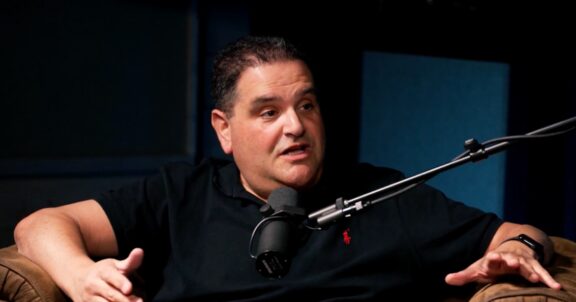
Paul Samuels is President, Global Partnerships at AEG International, one of the world's leading sports and entertainment companies, owning venues, sports teams and operating as a music promoter behind some of the biggest festivals and tours on the planet. In the role, started with AEG in 2007, Paul manages the Global Partnerships division for all territories outside the United States, overseeing sponsorship sales, partnership activation and premium seat and suite sales across Europe and APAC. His portfolio includes The O2 in London, the world's most popular music venue, alongside other AEG International venues and AEG Presents, the company's promoter arm covering tours, festivals and events. He leads a team of over 100 people and has been lead negotiator on some of the industry's largest sponsorship and naming rights deals, with brand partners including O2, American Express, Barclays, Uber, AB InBev, Asahi, IG and UOB. He is best known for leading the two-year negotiation that transformed the Millennium Dome into The O2, a deal he initiated while working as Head of Sponsorship at O2, and which opened in June 2007. He has been with AEG for nearly 20 years.
Duration: 54 minutes
Season: 2 · Episode 10
Also available: Audio only on Spotify, Apple Podcasts and Acast
The Millennium Dome, the national embarrassment and the phone call Paul put down
The story at the centre of this episode is one of the most unlikely in live music history. The Millennium Dome was built by the government as an exhibition for the year 2000, designed to attract 12 million visitors, it got 6 million, went over budget and became a national punchline. The press hated it from the moment the queen and Tony Blair were left standing in the rain on opening night. When it closed after a year it sat empty, a vast white tent in East London that nobody wanted and everybody mocked. Then AEG a company most people had never heard of, who many assumed made washing machines, looked at the site and saw a music venue. They called Paul Samuels, who was then running sponsorship at O2 and had just been doing things like sponsoring Arsenal's shirt and the England rugby team's World Cup win. He listened. He put the phone down. They called back. They flew him to America to show him what a real live music venue looked like. He came home having seen acoustics, food, premium seating and customer service that London venues, Wembley and Earls Court both described in the conversation as genuinely poor experiences, had never offered. He was converted. And then the real work began.
The two-year negotiation, the board that said no and the priority ticket idea that changed everything
What Paul did next was not straightforward. He went to the O2 board and presented the idea of naming rights for the Millennium Dome - a concept that barely existed in the UK at the time. They said no. He went back to AEG, renegotiated protections and came back. They said no again. This happened three or four times. Every objection was answered, every risk mitigated. The board were nervous about a 15-year commitment, about the Dome's toxic reputation and about the fact that the company was about to be sold to Telefonica, which made large debts on the books an unwelcome prospect. The deal was finally approved and signed in March 2005 - two years before the venue opened. The idea that held the whole thing together was O2 Priority: the concept that O2 mobile customers could buy tickets 48 hours before anyone else. Paul describes it as the thing that made the commercial logic work in a market where mobile phone networks were all offering the same product at the same price. Brand loyalty was the only differentiator. A music venue with your name on it, and tickets nobody else could get, was the answer. The first O2 pre-sale was Justin Timberlake - it sold 74 tickets, and Paul remembers people wondering whether it would ever work. Today O2 sells out every pre-sale and promoters actively ask what O2 can do for them.
Opening night, the Beyoncé commercial and what makes a partnership feel natural
The O2 opened on 24 June 2007 with Bon Jovi. The night before, a private staff event featured Peter Kay, Basement Jaxx and Keane. Paul had left O2 a year earlier to run the UK operation for the Bonum Group, the American naming rights agency he had hired to help evaluate the original deal, which meant he was not there as an O2 employee when the doors opened, though he was of course invited to both events. He describes the moment with a characteristic mixture of pride and disbelief. He still gets a pinch-me feeling every time he goes to The O2. He sat there and thought: I named this place. The partnership's success, he explains, came from how naturally it worked. O2 built a television campaign around the venue's launch, something that had never been done for a music venue anywhere in the world. They negotiated priority ticket access for O2 customers. Artists including Beyoncé and Coldplay gave their time for free to appear in O2 commercials, with O2 paying for the production and the media but not the artist. Beyoncé loved the resulting commercial so much that she later asked O2 for the footage and the costumes, using them as a backdrop in one of her own live shows. Paul's observation on this is the clearest articulation of what great brand partnerships actually look like: people pay millions to be associated with Beyoncé. O2 did not pay her a fee at all. The partnership worked because it felt genuinely natural. Today people do not think of The O2 as a commercial naming rights deal. They just think of it as The O2.
Asia expansion, facial recognition, data and why live music will always win
The second half of the conversation moves into where AEG is building next and what the live music industry looks like in ten years. AEG has opened IG Arena in Nagoya, Japan, approximately 90 minutes from Tokyo on the bullet train, and is working on a second venue in Osaka. In Bangkok they have opened a 4,000-capacity venue and are under construction with a 20,000-seat arena, both built above shopping malls in partnership with the Mall Group, due to open in early 2028. Paul describes the Asian expansion as one of the most exciting parts of his current role, a different way of selling, a different business culture and a market where European and American live music infrastructure has historically been absent. He went to a Taylor Swift show in Tokyo while scouting and watched the audience applaud between songs and file out in orderly lines at the end, a contrast to British concert behaviour that both he and Mark find simultaneously admirable and faintly appalling. On technology: facial recognition at the Intuit Dome in Los Angeles already allows fans to walk in without a ticket. Paul expects this to arrive in the UK within ten years, delayed primarily by data protection sensitivities rather than technical readiness. But his view of what matters most has not changed in nearly 30 years. Live is doing so well because it is still live. We are humans. We are born out of real experiences. No technology changes that.
(00:50) Welcome - Paul introduced as the first president on the Blinding Talent podcast
(01:03) What AEG is and what Paul's role covers - venues, promoter arm, sports teams, ticketing, festivals
(02:32) BST Hyde Park, Coachella and the festival portfolio
(03:20) Day-to-day as President, the 100-person team and why people think O2 runs the venue
(04:05) Why live music excites Paul right now, post-Covid explosion, premium spending
(05:11) Standing in Hyde Park watching 65,000 people, the personal moment
(06:48) Customisation and the evolution of ticket types, from 3 options to 12 or 13
(07:47) Career path, did he always see it going this way?
(08:04) Mentoring 16-year-olds and the advice he gives about not knowing what you will do
(09:10) The Millennium Dome - what it was, why it failed, 6 million visitors not 12 million
(09:42) Opening night in the rain - the queen, Tony Blair, the journalists and the headlines
(11:33) AEG's origin - Philip Anschutz buying the LA Kings, building the Staples Center, creating LA Live
(12:42) AEG looks at London - Harvey Goldsmith mentions the Millennium Dome
(13:32) Paul is working at O2 as Head of Sponsorship when AEG calls - he puts the phone down
(14:19) AEG takes Paul to LA and Vegas - he sees what a real live music venue looks like
(15:11) Wembley Arena and Earls Court - what London arenas were really like before The O2
(15:45) AEG presents the founding partner opportunity - Paul asks about naming rights instead
(16:34) Going back to O2 - the CEO tells him to get out of his office
(16:42) The CMO says do the research - Paul hires the Bonum Group in America
(17:38) Naming rights did not really exist in the UK at this point
(17:54) Paul flies to America to find an expert agency - the Bonum Group
(18:34) The O2 Priority concept - brand loyalty in a market where every network offered the same product
(19:09) Three months of negotiation - the deal is nearly done
(20:56) Going back to AEG repeatedly - solving every objection
(21:14) Signed in March 2005 - two years before the venue opened
(23:10) The pinch-me moment - "I sit there and think to myself, I named this place"
(23:54) Opening night - Bon Jovi on June 24 2007, private staff event the night before
(24:04) The private event - Peter Kay, Basement Jaxx and Keane
(24:21) Why Paul had already left O2 - the Bonum Group offer
(26:48) What makes a great partnership - when it feels completely natural
(27:57) O2 built a TV campaign around the venue launch - first time ever for a music venue
(28:51) Justin Timberlake was the first O2 pre-sale at the O2 - sold 74 tickets
(30:34) Beyoncé loved the commercial - asked O2 for the footage and the costumes
(33:22) Post-Covid live explosion - 50% of last year's AEG arena shows were debut arena artists
(33:47) AEG expanding into Asia - Nagoya, Osaka and Bangkok
(34:37) Bangkok - 4,000-capacity venue open, 20,000-capacity arena under construction above a shopping mall, due 2028
(36:16) Taylor Swift in Tokyo - the audience applauds between songs and files out in orderly lines
(39:46) Facial recognition at the Intuit Dome in LA - your face is your ticket
(44:11) Nearly 30 years in the industry - what would Paul change?
(45:04) Advice to younger people - don't be afraid of risky decisions
(48:38) What does the future of live music look like?
(48:47) It's still live music - the experience is everything
(49:22) What makes the industry special - the people and the access
(53:36) Closing - the Japan orderly filing out fantasy
"I still have that pinch moment every time I go to The O2. I sit there and think, I named this place."
Paul Samuels
"People pay millions to be associated with Beyoncé. O2 didn't pay her a fee at all."
Paul Samuels
"If you want to play at the best venue, the newest venue in London, you're going to have to play by our rules."
Paul Samuels
The Blinding Talent Music Industry Podcast is hosted by Mark Adams - founder of Blinding Talent and former Director of Music Programming at Channel 4. Equal parts campfire stories and practical insight, each episode is an in-depth conversation with a senior figure from across the music industry.
If this episode resonated, Blinding Talent works with independent artists across the UK and internationally - helping them build the kind of profile, audience and industry positioning that makes conversations with venues, agents and brand partners possible. From artist management consultancy with Mark Adams to digital marketing campaigns across Spotify, Meta and YouTube, everything we do is built around getting artists closer to the music industry.
Paul Samuels is President, Global Partnerships at AEG International, responsible for all territories outside the United States. He oversees sponsorship sales, partnership activation and premium seat and suite sales across Europe and APAC, including The O2 in London - the world's most popular music venue - as well as BST Hyde Park and AEG's international venue and festival portfolio. He leads a team of over 100 people and has been lead negotiator on some of the industry's largest sponsorship and naming rights deals, with brand partners including O2, American Express, Barclays, Uber, AB InBev, Asahi, IG and UOB. He has been with AEG for nearly 20 years and took up his current role in April 2025.
The Millennium Dome was built by the UK government as an exhibition for the year 2000. It was projected to attract 12 million visitors, attracted 6 million and was widely seen as a public failure. After closing, the site sat empty until AEG - the American sports and entertainment company - acquired it and decided to build a music venue and entertainment district. Paul Samuels, then working as Head of Sponsorship at O2, initiated and led a two-year naming rights negotiation. The deal was signed in March 2005, two years before the venue opened. The O2 opened on 24 June 2007 with a Bon Jovi concert and has since become the world's most popular music venue by number of shows, regularly performing over 200 events per year.
O2 Priority is the programme that gives O2 mobile customers access to tickets 48 hours before general sale. The idea was developed by Paul Samuels as the commercial logic behind the O2 naming rights deal for The O2. At the time, every mobile network offered broadly the same product at the same price, the only real differentiator was brand loyalty. Priority ticket access gave O2 customers a concrete, tangible reason to stay with the network. It launched with The O2 in 2007 and has since become one of the most recognised loyalty programmes in the UK, with artists and promoters now actively seeking O2's involvement in their campaigns because of the marketing reach and ticket-selling power the programme has built.
The Blinding Talent Music Industry Podcast is hosted by Mark Adams, founder of Blinding Talent and former Director of Music Programming at Channel 4. Guests include Paul Samuels, Colin Barlow, Sol Parker, Judd Lander and many others from across the music industry.