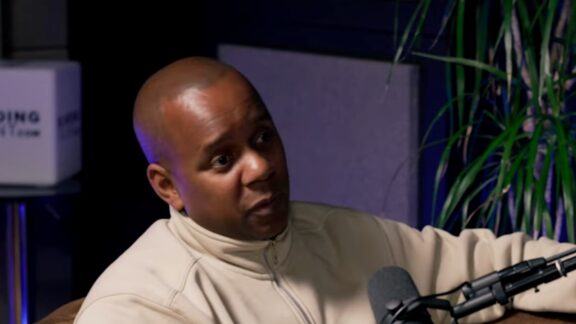

Season 1 · Episode 3
From a council estate in Nottingham to Head of A&R at EMI. Borrowed someone's suit and someone else's shoes to get an internship with Jonathan Shalit. Managed N-Dubz from under-18 nights to the O2 Arena. Signed Stefflon Don at Polydor. First A&R meeting at EMI - Joe Kentish plays him Olivia Dean's Dive. Was in the room with Jay-Z and Beyoncé. Got there via a Spanish hotel tour with a tribute group called R&B Superstars and the MMF.
Rich Castillo grew up on a council estate in Nottingham in a single parent family, studied Performing Arts at college, taught choreography at local youth clubs to earn extra cash and formed a tribute act called R&B Superstars - covering N Sync, Backstreet Boys and Boyz II Men - that toured Spain for a summer doing hotel shows. When the group moved to London to get a record deal the company pulled the plug, leaving five people from the East Midlands with no family, no friends, no money and no record deal. Most went back to Nottingham. Rich stayed. He was on the New Music for Musicians benefit scheme when his job centre officer - who happened to have an MMF advertisement on his desk - sent him to see Jonathan Shalit. He borrowed someone's suit and someone else's shoes. He got the internship.
Through the MMF courses that followed - covering touring, publishing, merchandise and day-to-day management - he learned the fundamentals of the music business. He stalked N-Dubz for three or four months after seeing them perform at In the City in Manchester, became a familiar face at their shows, and when their manager - Dappy's father - died, he and Jonathan were there. He managed N-Dubz from under-18 nights to the O2 Arena.
He subsequently joined Universal as Head of A&R for All Around The World Records under David Joseph, relocated to Toronto to run Universal Canada's A&R team, returned to join Polydor under Ben Mortimer where he signed Stefflon Don, and then joined EMI Records as Head of A&R through Joe Kentish - where his first A&R meeting involved hearing Olivia Dean's Dive for the first time. He has also worked on Tion Wayne's Body (a number one in multiple countries), a Chase & Status deal and an Elton John project involving Pharrell and the Red Hot Chili Peppers at Sunset Sound.
Duration: 67 minutes 05 Seconds
Season: 1 · Episode 3
Also available: Audio only on Spotify, Apple Podcasts and Acast
The borrowed suit, the job centre and the internship that started everything
Rich Castillo's route into the music industry is one of the most specific and instructive origin stories in this podcast. He grew up on a council estate in Nottingham in a single parent family, moved to London as part of a tribute act called R&B Superstars, watched the record deal fall through, and found himself in Stratford, East London, with no money, no family nearby and no plan. He was on the New Music for Musicians benefit - a Labour government scheme for creatives seeking work - going to the job centre twice a week while teaching himself the business. His officer happened to have an MMF advertisement on the desk. He was sent to see Jonathan Shalit. He borrowed someone's suit and someone else's shoes, went to the meeting, and talked his way into an internship on the strength of his experience in the studio with the group. "I just saw the window of opportunity," he says, "and just ran for it." He rates the MMF training he received - courses in touring, publishing, merchandise, management - as the foundation of everything. Mark agrees. Both of them shout out the MMF and Anna and the team specifically.
N-Dubz from under-18 nights to the O2 Arena
The N-Dubz story is the most instructive A&R and management case study in this conversation. Rich first saw them perform at In the City in Manchester and became immediately addicted - "I didn't get it really but I think well there's plenty of artists no one ever gets but they make total sense at the same time." He stalked them for three or four months, went to every show, became a familiar face. When their manager, Dappy's father, died, Rich and Jonathan were already known to the group. Colin Barlow had done a deal with them at Polydor. The rest followed. He describes what made N-Dubz genuinely interesting: they were self-sufficient, Faze being a producing genius who was criminally underrated, Dappy talking to Rich about Phil Collins and the harmonic textures of 1980s pop-rock and how he had broken down the production techniques. They understood song structure in a way most pop artists do not. They went from under-18 nights - 28 kids sipping Bloody Tango, two microphones passed between three people - to full production lighting, dancers, pyro and CO2 bursts at the O2 in under two years. One year they did over 300 shows. Never had real financial tour support. Built the fan base from the ground up without skipping steps.
Universal, Toronto, Polydor, Stefflon Don and the EMI chapter
The career that followed is a study in persistence and geographic flexibility. After N-Dubz finished their third album Rich joined Universal as Head of A&R for All Around The World Records under David Joseph, working on Tulisa's solo, Dappy's solo and signing Charlie Brown, who had a hit. David Joseph and Max Hall then offered him the opportunity to run the A&R team at Universal Canada in Toronto. He went with a wife, an 18-month-old and no family support, had a second baby there, started a dance label within Universal that still exists, but when his boss left and the isolation of a new city with two small children and a job that required taking planes to travel between cities became unsustainable, he came back. David Joseph brought him into Polydor under Ben Mortimer, where he signed Stefflon Don - "it just went off, it just went off." From there he joined EMI Records as Head of A&R through Joe Kentish, who he describes as one of the best A&R figures in the country alongside Nick Raphael. His first A&R meeting at EMI involved Joe playing him Olivia Dean's Dive - four years after she had been signed, through multiple A&Rs, with Joe now pointing the whole label at her as the priority.
A&R philosophy, brand vs music and why the hardest thing in 2025 is being heard
Rich's A&R philosophy is specific: fill the gaps. Identify where the artist's strengths and weaknesses are, create the environment that allows them to excel, never accept okay at any stage, and always know when to leave the song alone. On the brand vs music debate - an A&R colleague of Mark's argued music first, brand after - Rich is the opposite: brand first, because the brand forces you to be deliberate. "Without clarity and definition it is really hard to pin an audience." On song length and TikTok, his view is similarly practical: know your audience first and they will tell you the length. Tion Wayne's Body, a number one in multiple countries, is 1 minute 52 seconds. On the hardest thing for an artist in 2025: having a point of difference amongst so much noise. "The hardest thing right now is to give people a reason to care about you." He sees an AI cleanse coming, a global analog reset towards authenticity and originality. He also sees digital natives who drive their own content, do their own edits and understand both musicality and the internet as the most exciting emerging artists. He thinks bands are coming back for the same reason.
"I just saw the window of opportunity and ran for it. I borrowed someone's suit and someone else's shoes to go and meet Jonathan Shalit. That was the start."
Rich Castillo - A&R executive, on the internship that changed everything
"The brand forces you to be deliberate. Without clarity and definition it is really hard to pin an audience. Brand first, always."
Rich Castillo - on the most important debate in A&R
"The hardest thing right now is to give people a reason to care about you. There is so much noise. Having a real point of difference is everything."
Rich Castillo - on what artists need today
The Blinding Talent Music Industry Podcast is hosted by Mark Adams - founder of Blinding Talent and former Director of Music Programming at Channel 4, where he launched the Official YouTube Chart (2015) and Spotify's first ever Streaming Chart (2016). Each episode is an in-depth conversation with a senior music industry figure - equal parts campfire stories and practical insight.
If this episode resonated, Blinding Talent works with independent artists across the UK and internationally - helping them build the kind of identity clarity, brand positioning and audience that Rich describes as the foundation of everything.
From artist management with Mark Adams to digital marketing campaigns across Spotify, Meta and YouTube, everything we do is built around getting artists closer to the music industry.
Rich Castillo is a music industry A&R executive with a career spanning Universal Music, Polydor and EMI Records. He grew up on a council estate in Nottingham, started in the industry through an internship with Jonathan Shalit after his job centre officer placed an MMF advertisement on the desk, and managed N-Dubz from under-18 nights to the O2 Arena before moving into A&R. His subsequent A&R career has included signing Stefflon Don at Polydor, hearing Olivia Dean's Dive in his first meeting at EMI, working on Tion Wayne's Body (a number one in multiple countries), a Chase & Status deal and an Elton John project involving Pharrell and the Red Hot Chili Peppers at Sunset Sound.
Rich Castillo managed N-Dubz from their earliest days - having first seen them perform at In the City in Manchester and stalked their shows for months until, when Dappy's father and their manager died, he and Jonathan Shalit were the familiar faces the group turned to. Working alongside Colin Barlow who did the deal at Polydor, he helped take them from under-18 nights with 28 kids in the room to the O2 Arena. In one year they did over 300 shows. He credits Fazer - the group's producer - as a platinum-record genius who was criminally underrated because he worked behind the scenes rather than in front of the cameras.
Rich is direct: brand first. He argues that the brand forces an artist to be deliberate, to define who they are and who they are talking to, and that without that clarity it is almost impossible to pin an audience or construct a meaningful campaign. He acknowledges that other experienced A&Rs disagree and believe music should come first, but his view from decades of A&R work is that artists who meander through genres without a clear identity consistently struggle to build audiences, regardless of the quality of their music.
The Blinding Talent Music Industry Podcast is hosted by Mark Adams - founder of Blinding Talent and former Director of Music Programming at Channel 4. Guests include Rich Castillo, Colin Barlow, Sol Parker, Judd Lander and many others from across the music industry.